About 20 minutes
The Monkey's Frolic: A Humorous Tale, in Verse — Reading Notes
Fantasy Juvenile Worlds
4,465 recorded words. 5 minutes difference from this book's estimate.
View Gutenberg source #31486
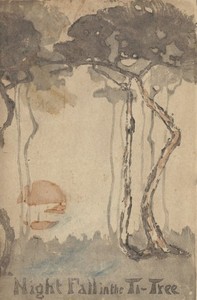
Night Fall in the Ti-Tree — Themes and Context can be approached with a clearer sense of reading commitment from its source measurements: 3,438 words, 15 min estimated reading time, and 1 detected text section.
The text analysis averages about 24.2 words per sentence, while the detected sections provide another way to judge how the source is divided.
Project Gutenberg metadata also associates the work with “Children's poetry, Australian,” connecting these edition facts with the source record’s subject description.
Explore this collection
These alternatives are selected using recorded categories and estimated reading time.
About 20 minutes
Fantasy Juvenile Worlds
4,465 recorded words. 5 minutes difference from this book's estimate.
View Gutenberg source #31486About 21 minutes
Fantasy Juvenile Worlds
4,663 recorded words. 6 minutes difference from this book's estimate.
View Gutenberg source #26650About 23 minutes
Fantasy Juvenile Worlds
5,242 recorded words. 8 minutes difference from this book's estimate.
View Gutenberg source #25634Search stored excerpts and compare books → Choose by your preferences →
Choices use stored catalog measurements. Estimates vary with reading speed. A shared category is a catalog label, not a claim that two books have the same argument or literary quality.
Search reads excerpt text stored with this catalog and links to its associated Gutenberg record. The connection is stored in the site database; this tool does not recheck that every excerpt is word-for-word identical to that external record. Excerpt search does not cover every chapter and does not verify historical publication dates.
Catalog snapshot checked: 2026-09-26. Coverage: 95 public books, 95 available source excerpts.
Calculated from edition completeness, EPUB availability, text structure and catalogue metadata. Not a user rating.
Total of 100 points, scaled to a 2.5-5.0 range. Editions with an empty description or a missing EPUB file are not scored.
Public-domain source text
The source text is kept in the dedicated reader, separate from this catalogue record and its commentary.
Night Fall in the Ti-Tree opens with a precise soundscape: frogs strumming banjoes, crickets shrilling, and bats flying waveringly as dusk falls. The poem’s first half builds a rhythmic, almost musical evening scene, using repetition and onomatopoeia to evoke the Australian bush. But the tone pivots sharply when the speaker addresses the rabbits directly, warning of “man’s merciless traps” laid at their burrow doors. This shift from idyllic observation to grim foresight is the work’s most striking structural choice.
The poem’s opening lines establish a sonic landscape: frogs on banjoes, crickets that “outshrill one another,” and bats that fly “waveringly.” The repeated “Shrill.... Shrill....” mimics the insects’ call, while the internal rhyme of “near pond” and “other” creates a lulling cadence. The meter is irregular but musical, with short lines and occasional couplets that mirror the darting movements of bats and rabbits. This auditory focus is unusual for a children’s poem, prioritizing atmosphere over narrative.
After describing rabbits that have “frisking and flirting / Loped to their burrow,” the speaker breaks the pastoral mood with a direct question: “Does no foresight show you / What may happen some day?” The answer is a stark description of traps: “Devil’s own snaps” set in the rabbits’ own doorway, covered with sand and leaves. The language becomes visceral—“fierce biting,” “steel chain affrighting”—and the rabbits’ imagined scream is called “a mute thing by kind,” a paradox that underscores their voiceless suffering.
The poem invokes divine protection: “Yet God was on your side, / Else why did He make / Such long ears to hearken? / Such bright eyes to wake?” This rhetorical turn reframes the rabbits’ physical traits as gifts for survival, not mere decoration. The final stanza urges them to “Remember Who’s for you, / Flirt tails and away!”—a blend of piety and practical advice. The moral is not sentimental but pragmatic, acknowledging danger while affirming the creatures’ own agency.
The title page notes that the woodcuts were “imprinted now for the first time by hand at the Sign of the Rabbit, 89 Collins Street, the 13th of July, 1905.” This colophon emphasizes the book’s artisanal production: Geraldine Rede and Violet Teague created both text and images. The phrase “Sign of the Rabbit” ties the imprint to the poem’s subject, while the precise date and address ground the work in a specific Melbourne location. The physical object—hand-printed, illustrated—is integral to the reading experience.
Night Fall in the Ti-Tree is best read aloud, its rhythms and sudden tonal shifts most effective when heard. The poem’s brevity (under 500 words) belies its emotional range, from lullaby to cautionary tale. Readers may wish to compare the verse with the original woodcuts, which are not included in this text-only edition but are referenced in the colophon. The work stands as a distinctive example of early Australian children’s literature, blending local flora and fauna with a surprisingly dark moral vision.
I keep thinking about that old woodcut of the rabbit in Night Fall in the Ti-Tree, the one that makes dusk feel so gentle before the traps appear. It reminded me of a smaller, softer volume I once opened, Rose buds — Reading Companion, where every creature seems safe, and the quiet lingers a little longer, undisturbed.
Your answers remain private and are stored only in this browser.