About 106 minutes
Canada and Other Poems — Inside the Classic
Fantasy Juvenile Worlds
24,379 recorded words. 5 minutes difference from this book's estimate.
View Gutenberg source #6957
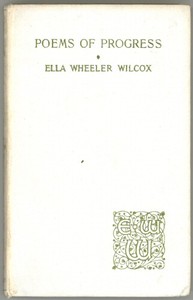
This digital edition of Poems of Progress and New Thought Pastels — Inside the Classic is described by source-level measurements including 23,074 words, 1 hr 41 min estimated reading time, and 4 detected text sections.
The text analysis averages about 19.7 words per sentence, while the detected sections provide another way to judge how the source is divided.
Project Gutenberg metadata also associates the work with “American poetry,” connecting these edition facts with the source record’s subject description.
Explore this collection
These alternatives are selected using recorded categories and estimated reading time.
About 106 minutes
Fantasy Juvenile Worlds
24,379 recorded words. 5 minutes difference from this book's estimate.
View Gutenberg source #6957About 106 minutes
Fantasy Juvenile Worlds
24,270 recorded words. 5 minutes difference from this book's estimate.
View Gutenberg source #9652About 96 minutes
Fantasy Juvenile Worlds
21,903 recorded words. 5 minutes difference from this book's estimate.
View Gutenberg source #18424Search stored excerpts and compare books → Choose by your preferences →
Choices use stored catalog measurements. Estimates vary with reading speed. A shared category is a catalog label, not a claim that two books have the same argument or literary quality.
Search reads excerpt text stored with this catalog and links to its associated Gutenberg record. The connection is stored in the site database; this tool does not recheck that every excerpt is word-for-word identical to that external record. Excerpt search does not cover every chapter and does not verify historical publication dates.
Catalog snapshot checked: 2026-09-26. Coverage: 95 public books, 95 available source excerpts.
Calculated from edition completeness, EPUB availability, text structure and catalogue metadata. Not a user rating.
Total of 100 points, scaled to a 2.5-5.0 range. Editions with an empty description or a missing EPUB file are not scored.
Public-domain source text
The source text is kept in the dedicated reader, separate from this catalogue record and its commentary.
Ella Wheeler Wilcox's Poems of Progress and New Thought Pastels (1913) opens with a preface that immediately establishes a central tension: the inadequacy of language to capture love. The speaker declares, 'There are no words with Love commensurate,' a claim that sets the stage for a collection that repeatedly tests the limits of poetic expression. The volume is divided into two distinct sections: the longer 'Poems of Progress,' which includes narrative poems, meditations on social reform, and personal reflections, and the shorter 'New Thought Pastels,' a series of compact, affirmative verses that read almost like mantras. This structural shift itself signals a change in pace and purpose, from expansive argument to concentrated suggestion.
The preface, titled 'Love's Language,' is not a conventional introduction but a poem that interrogates the very medium of the book. Wilcox asks whether Love speaks 'in couplets, or in epics grand' and answers that 'His varying moods all forms of speech employ.' Yet she concludes that all speech is 'inadequate.' This self-consciousness about language recurs throughout the collection. In 'The Way,' the speaker warns against following any leader, insisting that each soul must find its own path: 'Follow no man, and by no man be led.' The poem's imperative tone—'Awake, and go ahead'—mirrors the preface's insistence on the limits of received forms. Together, they frame the book as a search for a voice that can match the urgency of its message, even as that message remains elusive.
Several poems in 'Poems of Progress' adopt a prophetic, almost incantatory rhythm. 'The Breaking of Chains' repeats the phrase 'the thought of the world' in a driving anaphora: 'Now the thought of the world and the wish of the world and the song of the world will make / A force so strong that the fetters forged for a million years must break.' The poem links personal liberation to social change, condemning 'superstitious fear' and 'greed and pride.' Yet this fervor is tempered by quieter pieces. 'December' personifies the Old Year in a melancholic dialogue, its pace slowed by enjambment and a resigned tone: 'I, too, shall sink full soon to rest,' he sighs. The contrast between these two modes—the urgent, collective chant and the intimate, reflective monologue—creates a deliberate alternation of pace that shapes the reader's experience of the collection.
The second section, 'New Thought Pastels,' marks a sharp departure in form and tone. Where the earlier poems often unfold over multiple stanzas, these pieces are brief, sometimes only four lines. 'Affirm' commands: 'I am the master of my fate; / I am the captain of my soul.' The directness and repetition of 'I am' create a mantra-like effect, stripped of narrative or metaphor. 'Strength' similarly reduces its message to a single assertion: 'Strength is the power to stand alone.' This compression reflects the 'New Thought' movement's emphasis on affirmative thinking and self-reliance. The section's title—'Pastels'—suggests softness, but the verses are hard-edged and declarative. The shift from the discursive, often rhyming progress poems to these terse affirmations alters the reading pace dramatically, inviting the reader to pause and absorb each statement as a discrete unit of wisdom.
Readers approaching this collection will find two distinct experiences within a single cover. The 'Progress' poems reward those who enjoy narrative sweep and social commentary, while the 'Pastels' offer a more meditative, almost devotional reading. Wilcox's preface warns that no language can fully capture love; the book itself becomes a demonstration of that limitation, moving restlessly between modes in search of a form adequate to its convictions. Pay attention to how the poems shift between collective and individual voices, and how the pace of the verse mirrors the urgency or stillness of its subject.
There are evenings when I shelve Ella Wheeler Wilcox’s gentle affirmations, her plea for self-trust, and think of an older, sterner voice asking similar questions of conscience. Both whisper of breaking chains—one through hope, the other through somber reflection. They never met, yet share a quiet kinship, like two candles in different windows. An Essay on War, in Blank Verse; Honington Green, a Ballad; the Culprit, an Elegy; and Other Poems, on Various Subjects — Text and Context holds that older flame.
Answer a few questions and save a private reflection on this device.