About 23 minutes
Christmas Roses — Reading Notes
Fantasy Juvenile Worlds
5,242 recorded words. 0 minutes difference from this book's estimate.
View Gutenberg source #25634
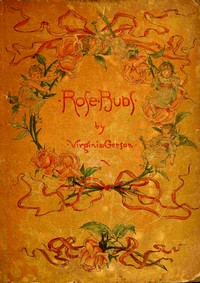
The source record for Rose buds — Reading Companion measures this digital text at 5,230 words, 23 min estimated reading time, and 3 detected text sections.
The text analysis averages about 19.6 words per sentence, while the detected sections provide another way to judge how the source is divided.
Project Gutenberg metadata also associates the work with “Children's poetry,” connecting these edition facts with the source record’s subject description.
Explore this collection
These alternatives are selected using recorded categories and estimated reading time.
About 23 minutes
Fantasy Juvenile Worlds
5,242 recorded words. 0 minutes difference from this book's estimate.
View Gutenberg source #25634About 23 minutes
Fantasy Juvenile Worlds
5,200 recorded words. 0 minutes difference from this book's estimate.
View Gutenberg source #26431About 21 minutes
Fantasy Juvenile Worlds
4,663 recorded words. 2 minutes difference from this book's estimate.
View Gutenberg source #26650Search stored excerpts and compare books → Choose by your preferences →
Choices use stored catalog measurements. Estimates vary with reading speed. A shared category is a catalog label, not a claim that two books have the same argument or literary quality.
Search reads excerpt text stored with this catalog and links to its associated Gutenberg record. The connection is stored in the site database; this tool does not recheck that every excerpt is word-for-word identical to that external record. Excerpt search does not cover every chapter and does not verify historical publication dates.
Catalog snapshot checked: 2026-09-26. Coverage: 95 public books, 95 available source excerpts.
Calculated from edition completeness, EPUB availability, text structure and catalogue metadata. Not a user rating.
Total of 100 points, scaled to a 2.5-5.0 range. Editions with an empty description or a missing EPUB file are not scored.
Public-domain source text
The source text is kept in the dedicated reader, separate from this catalogue record and its commentary.
Virginia Gerson's Rose Buds (1885) opens with a poem that immediately establishes its method: the narrator corrects a mistaken assumption about Josephine Maud, who is not asleep but lying still after a tantrum. The verse moves from direct address to a confession of bad behavior—"She crushed its pink nose, she tore off its wig"—then to maternal reproach and a resolution. This pattern of incident, consequence, and reform recurs throughout the collection, but Gerson varies her approach poem by poem.
Gerson matches poetic form to subject. The opening poem uses a loose anapestic rhythm that mimics a child's breathless confession, while "Naughty Tommy Warner" shifts to a shorter, punchier line: "Tommy! Tommy! Oh, where is Tommy Warner? / Naughty boys / Break their toys,— / Tommy's in the corner!" The truncated lines isolate the key words—"Naughty," "Break," "corner"—reinforcing the moral point through typography and rhythm. In "Papa Has Gone to Sea," the same technique yields a darker outcome: a boy is eaten by a shark, and the jaunty meter makes the sudden violence more startling. Gerson does not soften consequences; she embeds them in the verse's structure.
Gerson builds character through specific, tangible details. Josephine Maud's tantrum is defined by what she does to her doll: "She crushed its pink nose, she tore off its wig, / She whipped her poor doll with a crabapple sprig." The crabapple sprig is an unexpected, rural detail that grounds the scene. Similarly, the boy who goes to sea is identified by "sailor clothes / And a sunburnt nose"—a single physical trait that signals his transformation. In "Hoople," the rolling hoop becomes a metaphor for uncontrollable motion: "Who can tell but some day / They'll roll far away, / And never, no never, be found." The objects are never generic; they are chosen to reveal something about the child who uses them.
Gerson's narrator does not maintain a consistent tone. Sometimes the voice is confiding, as in the opening poem's "I can't bear to tell you, and yet—well, I will." At other times it is brisk and instructional: "Lillie! Lillie! Ah, here is Lillie Lansing: / Right foot! Left foot! Lilian is dancing." The exclamation marks and repeated names create a sense of direct address, as if the speaker is pointing out children in a room. In "The Race," the voice becomes communal: "Girls and boys come out to-day, / The sun is shining on the hay." This shift from intimate to collective address suggests that the collection was designed for both private reading and group recitation, a dual purpose that affects how each poem is paced.
Many poems in Rose Buds rely on strong end rhymes and repeated refrains that make them easy to remember. "Heigh ho! heigh ho! / Papa has gone to sea" recurs like a chant, and the rhyme scheme of "The Merry Little Tar"—"glory / story / sea / free"—creates a sing-song quality that belies the grim ending. Gerson also uses internal rhyme: "He climbed so fast / The topsail past." This technique, common in nursery rhymes, serves a pedagogical purpose: the poems are designed to be memorized, and the rhymes act as mnemonic anchors. The moral lessons—about temper, obedience, and consequences—are thus embedded in lines that children can easily recall and repeat.
The index lists 56 poem titles, many of which are children's names: "Josephine Maud," "Lilly Lansing," "Josiah Brown," "Betsy Braken." This suggests that the collection functions as a kind of gallery of character types, each poem a miniature portrait. The titles also indicate the poems' brevity—most occupy a single page—and their variety: some are about objects ("The Cat and the Hat," "Soap Bubbles"), others about activities ("Croquet," "The Bath"), and still others about moral states ("Naughty Tommy Warner," "Frightened Minnie"). The index itself is a map of Gerson's method: she moves quickly from one subject to the next, never dwelling long enough for the didacticism to become heavy.
Gerson's Rose Buds rewards attention to its small formal choices—the sudden shift in meter, the unexpected object, the change in narrative distance. Readers may find it useful to read the poems aloud, as the rhymes and rhythms are designed for the ear. The collection's brevity (5,230 words) and its 56 short poems make it easy to sample; a single poem can be examined for how Gerson balances instruction with entertainment. The moral lessons are explicit, but the craft that delivers them is worth noticing.
I keep thinking about that old poetry collection, how its playful voice sometimes turns quiet and serious. It reminded me of another book, An Essay on War, in Blank Verse; Honington Green, a Ballad; the Culprit, an Elegy; and Other Poems, on Various Subjects — Text and Context, which lingers in a similar way—gentle verses carrying heavier weight beneath.
Build a private reading journal entry for this title.