About 23 minutes
Children of Our Town — Reading Companion
Fantasy Juvenile Worlds
5,200 recorded words. 0 minutes difference from this book's estimate.
View Gutenberg source #26431
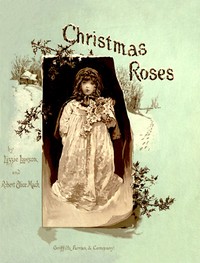
Before opening Christmas Roses — Reading Notes, the edition data offers a quick orientation: 5,242 words, 23 min estimated reading time, and 1 detected text section.
The text analysis averages about 23.1 words per sentence, while the detected sections provide another way to judge how the source is divided.
Project Gutenberg metadata also associates the work with “Children's poetry,” connecting these edition facts with the source record’s subject description.
Explore this collection
These alternatives are selected using recorded categories and estimated reading time.
About 23 minutes
Fantasy Juvenile Worlds
5,200 recorded words. 0 minutes difference from this book's estimate.
View Gutenberg source #26431About 23 minutes
Fantasy Juvenile Worlds
5,230 recorded words. 0 minutes difference from this book's estimate.
View Gutenberg source #73842About 21 minutes
Fantasy Juvenile Worlds
4,663 recorded words. 2 minutes difference from this book's estimate.
View Gutenberg source #26650Search stored excerpts and compare books → Choose by your preferences →
Choices use stored catalog measurements. Estimates vary with reading speed. A shared category is a catalog label, not a claim that two books have the same argument or literary quality.
Search reads excerpt text stored with this catalog and links to its associated Gutenberg record. The connection is stored in the site database; this tool does not recheck that every excerpt is word-for-word identical to that external record. Excerpt search does not cover every chapter and does not verify historical publication dates.
Catalog snapshot checked: 2026-09-26. Coverage: 95 public books, 95 available source excerpts.
Calculated from edition completeness, EPUB availability, text structure and catalogue metadata. Not a user rating.
Total of 100 points, scaled to a 2.5-5.0 range. Editions with an empty description or a missing EPUB file are not scored.
Public-domain source text
The source text is kept in the dedicated reader, separate from this catalogue record and its commentary.
Christmas Roses opens with a first-person speaker who addresses a child directly, establishing an intimate, almost lullaby-like tone. The speaker claims to have plucked a “bunch of Christmas Roses” from a garden where snow lay piled, immediately juxtaposing the warmth of the gift with the cold of winter. This initial poem sets a pattern of repetition and end-rhyme that recurs throughout the collection, creating a steady, comforting rhythm. However, as the book progresses, the narrative voice shifts: later poems adopt a third-person perspective or a child’s own voice, as in “The Christmas Stocking,” where little crippled Nell speaks in dialect (“a’cause,” “chimbley”). This variation in voice and pace—from the measured, adult address of the opening to the more colloquial, childlike speech of later verses—gives the collection a layered texture, moving between instruction and empathy.
The opening poem relies heavily on parallel structure and refrain. Lines such as “I plucked them in my garden where / The drifting snow lay piled” and “I plucked this bunch of verses, dear” mirror each other, reinforcing the speaker’s protective, nurturing role. The repeated phrase “my child” at the end of each stanza acts as a rhythmic anchor, slowing the pace and creating a soothing effect. This technique is not confined to the first poem; in “Father’s Boat,” the refrain “We’re watching, Nancy and me” appears twice, and the hymn-like repetition of “Father” and “Nancy” gives the poem a chant-like quality. The regularity of the meter—mostly iambic tetrameter and trimeter—further contributes to a predictable, comforting cadence suitable for reading aloud to children. Yet within this regularity, small variations occur: in “The Pet Rabbit,” the line “I think there’s only one thing that would make me happy quite” breaks the pattern with an extra syllable, momentarily quickening the pace before the final couplet.
While the opening poem uses a first-person adult speaker, later poems adopt different voices. “The Christmas Stocking” introduces a child’s direct speech, complete with dialectal contractions (“a’cause,” “chimbley”), which gives the poem a more immediate, dramatic quality. The narrator then steps back in the second stanza, using third-person (“He brought a golden orange”) to describe Santa’s visit. This shift from child’s voice to omniscient narrator creates a change in pace: the child’s lines are shorter, more breathless, while the narrator’s lines are more measured. Similarly, “Father’s Boat” uses a collective first-person (“we’re watching, Nancy and me”) that includes the reader in the family’s anxious waiting. The poem’s pace slows with the repeated “we’re watching” and the hymn-like line “We sing a bit of a hymn we know,” then quickens with the choked emotion of “We’re as near to choke as can b[?].” These shifts in perspective prevent the collection from becoming monotonous, offering varied emotional registers.
A recurring structural tension in Christmas Roses is the contrast between the safety of home and the harshness of the outside world. The opening poem explicitly sets this up: the garden is covered with snow, “no ray of sun has smiled,” yet the speaker offers a “bunch of verses” as a source of warmth. In “The Christmas Stocking,” the children’s poverty and the narrow chimney are obstacles, but Santa’s visit overcomes them, bringing a golden orange and a toy monkey. The poem ends with a moral affirmation that Santa “loves every one however rich or poor.” “Father’s Boat” extends this contrast to the sea: the father is away on a ship named “Pretty Polly,” and the family watches from home, singing a hymn for those at sea. The wind blows wildly, but the domestic scene of Nancy, Mother, and the speaker provides a counterpoint. This pattern of threat and reassurance, repeated across poems, gives the collection a coherent emotional arc, even as the voices and subjects change.
Readers approaching Christmas Roses will find a collection that rewards attention to its shifting voices and rhythmic patterns. The poems are best read aloud, as the cadences and repetitions are designed for oral delivery. Notice how the adult speaker of the opening gives way to children’s own words and how the meter occasionally breaks to signal emotional intensity. The contrast between indoor safety and outdoor danger recurs, but each poem handles it differently. These variations in pace and perspective make the book more than a simple set of moral lessons; they create a dynamic reading experience that reflects the uncertainties and comforts of a Victorian childhood.
There’s a moment in Christmas Roses when the lullaby cadence slips almost imperceptibly into third-person observation, and I always pause there, a little wistful, as if watching a child drift off mid-song. The same quiet shift haunts the pages of Mountain Idylls, and Other Poems — Reading Notes, where warmth and winter hold their breath together. Some rhythms just stay with you.
Your answers remain private and are stored only in this browser.