About 28 minutes
The Cowslip; Or, More Cautionary Stories, in Verse — Inside the Classic
Fantasy Juvenile Worlds
6,429 recorded words. 2 minutes difference from this book's estimate.
View Gutenberg source #45275
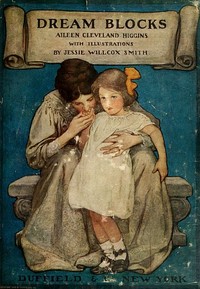
The catalog record for Dream Blocks — A Closer Reading provides practical reading context through 6,760 words, 30 min estimated reading time, and 2 detected text sections.
The text analysis averages about 22.1 words per sentence, while the detected sections provide another way to judge how the source is divided.
Project Gutenberg metadata also associates the work with “Children's poetry,” connecting these edition facts with the source record’s subject description.
Explore this collection
These alternatives are selected using recorded categories and estimated reading time.
About 28 minutes
Fantasy Juvenile Worlds
6,429 recorded words. 2 minutes difference from this book's estimate.
View Gutenberg source #45275About 27 minutes
Fantasy Juvenile Worlds
6,026 recorded words. 3 minutes difference from this book's estimate.
View Gutenberg source #47293About 25 minutes
Fantasy Juvenile Worlds
5,573 recorded words. 5 minutes difference from this book's estimate.
View Gutenberg source #36664Search stored excerpts and compare books → Choose by your preferences →
Choices use stored catalog measurements. Estimates vary with reading speed. A shared category is a catalog label, not a claim that two books have the same argument or literary quality.
Search reads excerpt text stored with this catalog and links to its associated Gutenberg record. The connection is stored in the site database; this tool does not recheck that every excerpt is word-for-word identical to that external record. Excerpt search does not cover every chapter and does not verify historical publication dates.
Catalog snapshot checked: 2026-09-26. Coverage: 95 public books, 95 available source excerpts.
Calculated from edition completeness, EPUB availability, text structure and catalogue metadata. Not a user rating.
Total of 100 points, scaled to a 2.5-5.0 range. Editions with an empty description or a missing EPUB file are not scored.
Public-domain source text
The source text is kept in the dedicated reader, separate from this catalogue record and its commentary.
The title poem, “Dream Blocks,” establishes the collection’s central metaphor: a child builds castles from “dream-blocks” that no one else can shake, and which “change each day.” This image of impermanent, self-made worlds recurs throughout the book. In “Stupid You,” a speaker chides an adult for dismissing a cobweb as mere dirt, insisting it is a fairy net. The tension between adult literalism and a child’s imaginative perception drives many poems. “Anagrams” literalizes transformation: the child tries to rearrange the letters of “sorrow” to spell “peace,” but cannot find the solution by supper time—a concrete, unresolved puzzle that mirrors the book’s gentle treatment of difficulty.
Several poems locate the child at a boundary between home and the unknown. In “Doorsteps,” the speaker sweeps a pine step and waits for a brownie elf, preferring the “broken” step with grasses growing through to a neighbor’s stone path. The step is both a literal threshold and a perch for fantasy. “The City Tree” contrasts a tree “that grows in the city street” with rural trees, noting how it “tries to be / A tree, but cannot.” The child’s voice observes without moralizing. “Home” (not excerpted in full) likely continues this theme. These poems ground wonder in specific, modest settings—a doorstep, a city tree—rather than in faraway lands.
Higgins often presents ethical questions through a child’s practical reasoning. In “A Test,” the speaker proposes a test of friendship that involves sharing a secret; the poem ends without revealing the outcome, leaving the reader to consider the test’s fairness. “Punishment” (excerpted only in part) asks “what is the use of it?”—a direct challenge to adult discipline. “First Pity” describes finding a hurt bird: “I want to make it well— / I wish my hands knew how!” The poem stops at the wish, not the cure. These pieces avoid neat resolutions, instead capturing the child’s incomplete understanding and genuine perplexity.
A cluster of poems explores the transition from day to dark. “Hover-Time” names the hour “between the light and dark” when “new insect cries” emerge and “the first bat circles.” The child notes that daytime things “are afraid of Eyes,” implying that night allows a different kind of seeing. “Night” confesses, “I do not like to say good-night,” because the dark is “such a wonder-world.” The speaker’s prayers are “hard to say” because the Dark “calls.” “The Ring Charm” introduces a gypsy-given ring that keeps away “the Woops that creep / About my bed when I’m asleep.” The charm is a tangible object that wards off formless fears, blending superstition with comfort.
Several poems treat loss as a natural part of play. In “Treasure Craft,” the child launches petal boats that “always go away from me,” sinking or disappearing. The speaker admits, “I’ve lost some things I love the best,” but concludes, “I love much more the sailing-fun, / And launch new ships when morning sings.” The emphasis is on the process, not the outcome. “Gone Somewhere” (title only in contents) likely continues this theme. “The Moon Path” imagines walking a moonbeam to find “the one / Who sings the Silver Song”—a quest that remains unfulfilled in the excerpt. The collection closes with “The Ring Charm,” whose ritual of kissing and turning the ring “three times for sake of luck” suggests an ongoing, hopeful practice.
Reading Dream Blocks sequentially reveals a careful architecture: the opening poems establish imaginative play and its limits; middle poems test moral and emotional boundaries; later poems confront fear and loss with concrete rituals. The child’s voice remains consistent—curious, stubborn, and unsentimental. Jessie Willcox Smith’s illustrations (not reproduced here) likely amplify the domestic settings and twilight moods. Readers may wish to track recurring objects (steps, rings, boats, clocks) and note how the child’s relationship to them shifts across the collection.
I keep coming back to Higgins’s dream-blocks—the way a child’s ordinary doorstep can hold an entire universe of quiet fear and wonder. It reminds me of the older holiday poems in A Midsummer Holiday and Other Poems — Background and Themes, where the same unhurried magic lingers, almost by accident, between the lines. Some books simply wait for you to remember them.
Build a private reading journal entry for this title.