About 30 minutes
The Little Daisy Girl and Other Poems — Background and Themes
Science Fiction Utopias
6,763 recorded words. 7 minutes difference from this book's estimate.
View Gutenberg source #7527
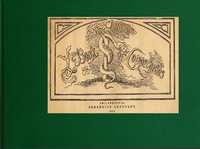
This digital edition of Ye book of Copperheads — Story, Setting & Ideas is described by source-level measurements including 5,077 words, 23 min estimated reading time, and 2 detected text sections.
The text analysis averages about 22.2 words per sentence, while the detected sections provide another way to judge how the source is divided.
Project Gutenberg metadata also associates the work with “United States -- History -- Civil War, 1861-1865 -- Poetry,” connecting these edition facts with the source record’s subject description.
Explore this collection
These alternatives are selected using recorded categories and estimated reading time.
About 30 minutes
Science Fiction Utopias
6,763 recorded words. 7 minutes difference from this book's estimate.
View Gutenberg source #7527About 36 minutes
Science Fiction Utopias
8,167 recorded words. 13 minutes difference from this book's estimate.
View Gutenberg source #16615About 50 minutes
Science Fiction Utopias
11,434 recorded words. 27 minutes difference from this book's estimate.
View Gutenberg source #26388Search stored excerpts and compare books → Choose by your preferences →
Choices use stored catalog measurements. Estimates vary with reading speed. A shared category is a catalog label, not a claim that two books have the same argument or literary quality.
Search reads excerpt text stored with this catalog and links to its associated Gutenberg record. The connection is stored in the site database; this tool does not recheck that every excerpt is word-for-word identical to that external record. Excerpt search does not cover every chapter and does not verify historical publication dates.
Catalog snapshot checked: 2026-09-26. Coverage: 95 public books, 95 available source excerpts.
Calculated from edition completeness, EPUB availability, text structure and catalogue metadata. Not a user rating.
Total of 100 points, scaled to a 2.5-5.0 range. Editions with an empty description or a missing EPUB file are not scored.
Public-domain source text
The source text is kept in the dedicated reader, separate from this catalogue record and its commentary.
Ye Book of Copperheads opens with a limerick about a snake that tries to bite Uncle Sam and is crushed by a Seven League Boot. This initial image establishes the collection’s central conceit: Copperheads—Northern Democrats opposed to the Civil War—are repeatedly figured as serpents, worms, or other low creatures. The verse form itself is a clue to the work’s method: short, punchy limericks and epigrams that rely on puns, exaggerated rhymes, and abrupt punchlines. The book’s table of contents lists sections such as “Gotham-Mites,” “Checker-Boarders and Keystoners,” and “Modern Heathen-Ians,” hinting at a geographic and political taxonomy of its targets. Shakespearean epigraphs preface many poems, framing the satire within a mock-heroic or theatrical register.
The most persistent image in the collection is the snake. Copperheads are called “vile,” “pestiferous,” and “abominable … worms” that “wriggle, and twist, and squirm.” The opening limerick literalizes the metaphor: a Copperhead snake tries to bite Uncle Sam and is crushed. Later poems extend the bestiary to include a “young giant” (the Union) who squeezes serpents to death, and an “old Tory dragon” whose egg hatches a Copperhead. The animal comparisons are not merely insulting; they create a consistent symbolic vocabulary. A poem about a “twistified Reed” who takes “Snake-Weed” as his pattern suggests that Copperheads are not only venomous but also crooked, twisting away from straight Unionist lines. The effect is to dehumanize the opposition while reinforcing the moral clarity of the war effort.
Each section is prefaced by a line from Shakespeare, often wrenched from context to serve a satirical purpose. For instance, “Nor doth this Wood lack Worlds” from A Midsummer Night’s Dream introduces a limerick about an “old Snake in New York” who advocates peace at home. The epigraph from Coriolanus—“And what Stock he springs of!!”—precedes a poem about Copperhead stock being “very high” but in need of “the right sort of tie.” These quotations do not deepen the literary allusion so much as they provide a mock-learned veneer. They also create a structural rhythm: the reader moves from a lofty Shakespearean line to a crude limerick, a juxtaposition that underscores the gap between noble rhetoric and base politics. The effect is cumulative, turning the book into a kind of anti-masque.
The table of contents lists sections named after places and groups: “Gotham-Mites” (New Yorkers), “Checker-Boarders and Keystoners” (possibly Pennsylvania and border-state politicians), and “Modern Heathen-Ians.” These labels suggest the authors aimed to map Copperhead sentiment onto specific regions and factions. The limericks themselves name figures like Vallandigham, a prominent Ohio Copperhead, and “Ben of New York,” likely Benjamin Wood, a Democratic congressman. The poem about “War Democrats” contrasts Seymour’s vacillation between war and peace. This geographic specificity grounds the satire in real political geography, making the book a kind of versified atlas of disloyalty. The reader is invited to recognize types and individuals, not just abstract villains.
The collection relies almost entirely on limericks and short epigrammatic stanzas. The limerick’s anapestic meter and AABBA rhyme scheme lend themselves to comic deflation: a serious subject is squeezed into a bouncy, almost nursery-rhyme form. Many poems end with a sharp twist—the snake is crushed, the tooth is broken, the mouth is silenced. Others use puns: “Copper stocks are uncertain to buy” plays on the double meaning of “stock.” The epigraphs from Shakespeare add a layer of mock-erudition, as if the authors are proving that even the Bard would condemn Copperheads. The brevity of each poem means the book can be read in short bursts, but the cumulative effect is relentless. The reader is never allowed to forget the central equation: Copperhead = snake = traitor.
This short collection rewards attention to its structural patterns: the alternation of Shakespearean epigraph and vernacular verse, the bestiary of snake and worm imagery, and the precise geographic naming of targets. Because the excerpts are incomplete, the full range of sections and targets remains unknown, but the surviving poems show a consistent satirical method. Readers interested in Civil War-era propaganda, political cartooning in verse, or the history of the Democratic Party’s anti-war wing will find this a concentrated example of how humor was weaponized during the conflict.
There’s something oddly tender about how that Copperhead book, for all its snarling satire, still aches with a lost sense of order—words trying to hold a war together. It reminds me of the quieter ache in Very Short Stories and Verses For Children — Context and Discussion, where the world feels just as fragile, only smaller and softer. Both leave me holding my breath a little.
Answer a few questions and save a private reflection on this device.