About 101 minutes
The Habitant and Other French-Canadian Poems — A Closer Reading
Science Fiction Utopias
23,186 recorded words. 9 minutes difference from this book's estimate.
View Gutenberg source #9801
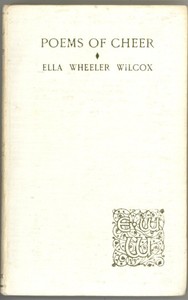
For Poems of Cheer — Reading Notes, the stored edition analysis reports 21,136 words, 1 hr 32 min estimated reading time, and 3 detected text sections.
The text analysis averages about 22.3 words per sentence, while the detected sections provide another way to judge how the source is divided.
Project Gutenberg metadata also associates the work with “American poetry,” connecting these edition facts with the source record’s subject description.
Explore this collection
These alternatives are selected using recorded categories and estimated reading time.
About 101 minutes
Science Fiction Utopias
23,186 recorded words. 9 minutes difference from this book's estimate.
View Gutenberg source #9801About 78 minutes
Science Fiction Utopias
17,827 recorded words. 14 minutes difference from this book's estimate.
View Gutenberg source #30272About 77 minutes
Science Fiction Utopias
17,568 recorded words. 15 minutes difference from this book's estimate.
View Gutenberg source #6618Search stored excerpts and compare books → Choose by your preferences →
Choices use stored catalog measurements. Estimates vary with reading speed. A shared category is a catalog label, not a claim that two books have the same argument or literary quality.
Search reads excerpt text stored with this catalog and links to its associated Gutenberg record. The connection is stored in the site database; this tool does not recheck that every excerpt is word-for-word identical to that external record. Excerpt search does not cover every chapter and does not verify historical publication dates.
Catalog snapshot checked: 2026-09-26. Coverage: 95 public books, 95 available source excerpts.
Calculated from edition completeness, EPUB availability, text structure and catalogue metadata. Not a user rating.
Total of 100 points, scaled to a 2.5-5.0 range. Editions with an empty description or a missing EPUB file are not scored.
Public-domain source text
The source text is kept in the dedicated reader, separate from this catalogue record and its commentary.
This volume, published in London in 1914, collects poems originally issued under the title Poems of Life, with a few new verses added. Despite its cataloging as Science Fiction & Utopias, the book contains no speculative or futuristic elements. Instead, Wilcox writes in a late-Victorian lyric mode, addressing art, love, mortality, and the gap between public cheer and private grief. The opening poem, “Worth While,” sets a tone of earnest striving, while later pieces like “In the Crowd” and “Life and I” reveal a darker undercurrent. Readers expecting utopian visions will find instead a poet who treats life as a bittersweet partnership with death.
The first poem, “Worth While,” imagines crossing a “mystic border-land” into the “wonder-world of Art.” Wilcox describes this realm as free of “discord” and “idle sorrow,” where “tears turn into rainbows.” The speaker feels awed and unworthy, calling herself “only the singer of a little song.” This self-deprecating posture recurs throughout the collection. In “The Unattained,” a poet pursues a vision that declares itself “the phantom of desire” and “the spirit of all great endeavour.” The vision warns that it can never be claimed: “All shall pursue, but none shall claim me.” These poems frame artistic ambition as a noble but unfulfillable quest, a theme that aligns with the volume’s title only ironically.
Several poems directly challenge the notion of cheer. In “In the Crowd,” Wilcox observes a social gathering and imagines what would happen if everyone spoke from the heart: “What a hush would come over the laughter! / What a silence would fall on the mirth!” She calls the crowd “maskers” and “sad-hearted,” suggesting that public gaiety conceals private despair. The poem “Life and I” personifies life as a lover with whom the speaker quarrels and reconciles, but ends with a threat: “I shall one day throw him over, / And plight troth with Death.” Even the title Poems of Cheer begins to feel like a protective facade. The excerpts offer no poems that sustain unalloyed optimism; instead, they repeatedly undercut cheer with mortality.
Wilcox writes in regular rhyme and meter, often using quatrains with alternating rhymes. In “The Unattained,” she employs a dream-vision structure with a dialogue between poet and ideal. The poem “In the Crowd” uses a series of rhetorical questions and exclamations to build dramatic tension. A notable structural feature is the repeated use of anaphora: “How they bow, how they bend, how they flutter” and “We live, we love, we woo, we wed, / We wreathe our brides, we sheet our dead.” This last couplet, from “The Year,” compresses the life cycle into a single line. The catalog subject “American poetry” is accurate, but the excerpts show a poet more concerned with universal emotional states than with any specifically American setting or theme.
Readers approaching Poems of Cheer through its catalog entry should set aside expectations of science fiction or utopia. The value of this collection lies in its candid treatment of the gap between social performance and inner life. Wilcox’s regular forms and direct language make the poems accessible, but their content often resists the very cheerfulness the title promises. A useful approach is to read the poems in sequence, noting how the speaker’s relationship with death and disappointment evolves across the volume.
That rainy day, Poems of Cheer kept slipping from my fingers, its bright verses hiding a stubborn ache. I kept thinking about masks, the ones we wear. Later, half-dreaming, I reached for The Habitant and Other French-Canadian Poems — A Closer Reading and found the same quiet sorrow, wrapped in a different language, waiting under the eaves of home.
Save your reaction, strongest insight, and memorable passage.