About 33 minutes
Sappho: A New Rendering — Text and Context
Historical Psychological Social Fiction
7,404 recorded words. 6 minutes difference from this book's estimate.
View Gutenberg source #42543
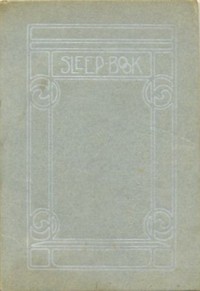
The source record for Sleep-Book Some of the Poetry of Slumber — Reading Notes measures this digital text at 5,990 words, 27 min estimated reading time, and 3 detected text sections.
The text analysis averages about 22.1 words per sentence, while the detected sections provide another way to judge how the source is divided.
Project Gutenberg metadata also associates the work with “Sleep -- Poetry,” connecting these edition facts with the source record’s subject description.
Explore this collection
These alternatives are selected using recorded categories and estimated reading time.
About 33 minutes
Historical Psychological Social Fiction
7,404 recorded words. 6 minutes difference from this book's estimate.
View Gutenberg source #42543About 40 minutes
Historical Psychological Social Fiction
9,187 recorded words. 13 minutes difference from this book's estimate.
View Gutenberg source #76703About 44 minutes
Historical Psychological Social Fiction
10,003 recorded words. 17 minutes difference from this book's estimate.
View Gutenberg source #3305Search stored excerpts and compare books → Choose by your preferences →
Choices use stored catalog measurements. Estimates vary with reading speed. A shared category is a catalog label, not a claim that two books have the same argument or literary quality.
Search reads excerpt text stored with this catalog and links to its associated Gutenberg record. The connection is stored in the site database; this tool does not recheck that every excerpt is word-for-word identical to that external record. Excerpt search does not cover every chapter and does not verify historical publication dates.
Catalog snapshot checked: 2026-09-26. Coverage: 95 public books, 95 available source excerpts.
Calculated from edition completeness, EPUB availability, text structure and catalogue metadata. Not a user rating.
Total of 100 points, scaled to a 2.5-5.0 range. Editions with an empty description or a missing EPUB file are not scored.
Public-domain source text
The source text is kept in the dedicated reader, separate from this catalogue record and its commentary.
The compiler's own poem opens the collection, directly addressing the reader with an imperative to find peace: "Peace, peace, thou over-anxious, foolish heart." This personal invocation sets a tone of intimate counsel rather than scholarly distance. The anthology then juxtaposes canonical voices—Spenser's drowsy landscapes, Shakespeare's fairy lullaby, Milton's "dewy-feathered Sleep"—with lesser-known verses, all united by a shared vocabulary of murmuring waters, poppied warmth, and the hush of night. The selection favors sensory, soothing imagery over narrative or argument, creating a cumulative effect that mirrors the gradual onset of slumber.
The first dozen poems establish a pattern of direct address to Sleep as a personified deity or gentle force. Coleridge's fragment describes Sleep as a "softly-breathing god," while Drummond calls him "Silence child, sweet father of soft rest." Shakespeare's lullaby from A Midsummer Night's Dream introduces a protective, magical tone—warding off "spotted snakes" and "thorny hedgehogs"—that recurs in later selections. The compiler's own voice reappears only at the collection's end, framing the anthology as a personal offering. Readers may notice how the opening poems emphasize invitation rather than description, as if the act of reading itself becomes a ritual to summon sleep.
Several poems construct environments that induce sleep through accumulated sensory detail. Spenser's stanza from The Faerie Queene layers "trickling stream," "ever-drizzling raine," and "murmuring winde" to produce a soundscape that "cast him in a swowne." Milton's Il Penseroso similarly entices "dewy-feathered Sleep" with "waters murmuring." These passages rely on repetition of soft consonants and long vowels, a technique the compiler likely valued for its hypnotic effect. The absence of sharp, jarring imagery is notable; even Keats's "poppied warmth" and "soothed limbs" maintain a consistent texture of gentle oblivion.
Leolyn Louise Everett contributes two original poems: the opening invocation and a closing nocturne. The latter shifts from collective lullaby to solitary vigil: "Now is the blackest hour of the long night, / The soul of midnight." Here, sleep is absent, and the speaker looks out "with tired, wide, sleepless eyes." This contrast with the earlier poems—which assume sleep will come—adds a note of longing and vulnerability. The dedication "To ETHEL DU FRÉ HOUSTON / who has brought the joy and beauty of dream into so many lives" suggests a personal context for the anthology, perhaps as a gift or tribute. The compiler's selections thus reflect both a literary taste and an intimate purpose.
Three excerpts from Keats appear near the end, each treating sleep as a threshold to another state. The first describes a "wakeful swoon" and the soul "flown, like a thought, until the morrow-day." The second apostrophizes "O magic sleep! O comfortable bird" that broods over the mind, leading to "golden palaces" and "silvery enchantment." The third, from Endymion, simply names "A sleep / Full of sweet dreams and health and quiet breathing." Together, they emphasize sleep's transformative power—not mere rest but entry into a mazy world. This cluster positions dreaming as the anthology's hidden subject, hinted at but not fully explored in the earlier selections.
The anthology's brevity—under 6,000 words—invites rereading as a cumulative experience rather than a reference work. Readers may find it useful to read the poems aloud, attending to the rhythm and sound patterns that the compiler has carefully arranged. The progression from communal lullaby to personal vigil suggests a narrative arc, however subtle. Approached as a sequence, Sleep-Book rewards attention to the interplay between canonical and obscure voices, and to the quiet drama of the compiler's own poetic framing.
Leafing through the Sleep-Book, I paused at Keats’s drowsy lines, and it stirred a quiet memory of another little volume, Fleurs De Lys, and Other Poems — Reading Notes. Both feel like hushed, intimate companions for a late hour, poems that seem to breathe softly between the pages, offering rest rather than argument.
Answer a few questions and save a private reflection on this device.