
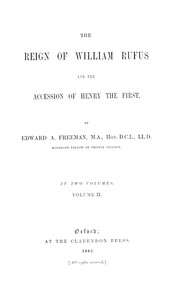
The Reign of William Rufus and the Accession of Henry the First, Volume 2 (of…
This isn't a novel, but it reads with the tension of one. Edward Freeman's second volume focuses on the turbulent reign of William II, nicknamed 'Rufus' for his red hair and fiery temper. After the death of his father, William the Conqueror, Rufus grabs the English throne, but his rule is immediately contested. His older brother, Robert, thinks he should have Normandy, and their younger brother, Henry, is waiting in the wings, eyeing everything.
The Story
Freeman walks us through Rufus's reign, which is a constant scramble to hold onto power. He fights rebellious barons, squeezes money from the country, and has epic clashes with the Archbishop of Canterbury, Anselm, over who's really in charge—the king or the church. The book builds toward its infamous climax: a hunting trip in the New Forest in August 1100. There, a nobleman named Walter Tireloz looses an arrow. It strikes the king, killing him. Tireloz flees, and the king's body is carted away with little ceremony. Within days, brother Henry seizes the crown and is crowned king. The official story is a hunting accident. But with so many people who wanted Rufus gone, and with Henry benefiting so immediately, the whole event reeks of a setup.
Why You Should Read It
What makes this old history feel fresh is Freeman's detective work. He doesn't just tell you what happened; he shows you the sources—the monks, the chroniclers, the official records—and points out the inconsistencies. He makes you a partner in the investigation. You feel the thick political atmosphere of suspicion. Rufus himself is a fascinating, unlikeable character: brash, greedy, and impious, yet undeniably effective. You're left wondering if his death was the result of his own tyrannical style finally catching up to him.
Final Verdict
This is a book for the curious reader who finds dry textbooks a snooze. It's perfect for anyone who enjoys a good historical mystery, fans of shows about medieval politics, or readers who want to look beyond the famous kings to the messy, complicated ones. Fair warning: it's a scholarly work from the 1800s, so the language is a bit formal in places, but the central drama is utterly gripping. You're not just learning history; you're sitting on the jury for one of England's oldest cold cases.
This masterpiece is free from copyright limitations. You do not need permission to reproduce this work.
Lucas Davis
1 year agoHaving read this twice, the clarity of the writing makes this accessible. Highly recommended.
Betty King
1 year agoVery interesting perspective.
Donna Martin
6 months agoHelped me clear up some confusion on the topic.
Emma Williams
8 months agoHonestly, the arguments are well-supported by credible references. Highly recommended.
Mary Lopez
2 years agoComparing this to other titles in the same genre, the language used is precise without being overly academic or confusing. A mandatory read for anyone in this industry.