
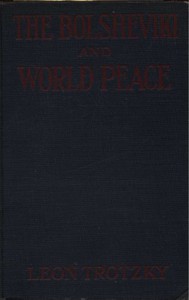
The Bolsheviki and World Peace by Leon Trotsky
Let's set the scene. It's 1918. The First World War is grinding on, millions are dead, and in Russia, the Bolsheviks have just seized power. This book is Leon Trotsky's immediate explanation to the world of what they plan to do next. It's not a memoir written in calm hindsight; it's a weapon, fired from the printing press in the middle of the chaos.
The Story
There isn't a traditional plot with characters. Instead, the 'story' is Trotsky's argument. He lays out the Bolshevik view that the Great War was an inevitable product of competing capitalist empires. He declares that the new Soviet government's first act was to sue for peace and publish all the secret treaties the old regime had made, exposing the cynical deals behind the fighting. The core narrative is the clash between two ideas: the failed 'imperialist peace' of the past and the promised 'proletarian peace' of the communist future. Trotsky insists that real, lasting peace can only come when workers across all nations rise up against their warmongering rulers. It's a direct appeal over the heads of governments to the people of the world.
Why You Should Read It
You should read this to hear a revolutionary voice without the filter of later history. Trotsky's writing here is bold, confident, and utterly convinced of his cause's rightness. There's no doubt, no introspection about the turmoil they've unleashed—just a clear, forceful vision of the future as he saw it. It's fascinating to see how he frames their actions as the only moral choice. He paints the Bolsheviks not as coup plotters, but as the only honest brokers for peace in a dishonest world. Reading it, you get a pure shot of revolutionary ideology before the grim realities of civil war and Stalinism set in. It helps you understand the magnetic power of these ideas at a time when the old order had completely broken down.
Final Verdict
This book is perfect for anyone who wants to move beyond textbook summaries and feel the heat of history. It's for readers interested in political theory, the roots of 20th-century conflict, or powerful rhetoric. It's definitely not a neutral account, and that's what makes it so valuable. You're not getting analysis; you're getting the source material. Approach it like listening to a gripping, one-sided speech from a pivotal moment in time. Just be ready for its intense, uncompromising perspective.
Legal analysis indicates this work is in the public domain. Preserving history for future generations.
Donald Davis
10 months agoI stumbled upon this title during my weekend research and the quality of the diagrams and illustrations (if applicable) is top-notch. It definitely lives up to the reputation of the publisher.
Mary Thomas
4 months agoAfter spending a few days with this digital edition, the data points used to support the main thesis are quite robust. I am looking forward to the author's next publication.
Elizabeth Perez
2 years agoI was skeptical about the depth of this book at first, but the objective evaluation of the pros and cons is very refreshing. A mandatory read for anyone in this industry.
Ashley Lee
4 months agoI particularly value the technical accuracy maintained throughout.
Sarah Gonzalez
1 month agoVery satisfied with the depth of this material.